
Museum Spotlight: The Gund
For our latest member spotlight, we are delighted to feature Kenyon College, a liberal arts institution in Gambier, Ohio that boasts a robust public art collection and an ambitious teaching museum, The Gund. I first connected with Daisy Desrosiers, David and Francie Horvitz Family Foundation Director and Chief Curator of The Gund, nearly five years ago when she stepped into her role. Since then, I have gained deeper insight into the compelling work she and her team are doing and I am gratified that Museum Exchange has been able to support these efforts through over 30 gifts of art that enhance Kenyon’s collection across both its campus and museum. In the below interview, Daisy talks about the significant role that art plays at Kenyon College and how The Gund’s activities reflect the college’s broader values and mission.
Joanne Cohen: When was Kenyon’s art collection established and how has The Gund evolved over time?
Daisy Desrosiers: Our museum’s art collection began with a gift of 80 modern and contemporary works from Graham and Ann Gund in 2011. Guided by the belief that Kenyon students should learn from extraordinary works of art, the Gunds envisioned a teaching environment anchored by excellence. Their generosity made it possible for students to study directly with works by artists such as Cy Twombly, Robert Rauschenberg, and Julie Mehretu, among others—an opportunity that places Kenyon in league with far larger institutions and affirms the College’s deep commitment to rigorous, art-centered learning.
What began as an exhibition space operating in the spirit of a kunsthalle with no permanent collection has grown into a fully accredited teaching and collecting museum with a broad educational mission. The permanent collection was formed in 2015, four years after the initial gift from the Gunds, and now includes nearly 500 works spanning painting, sculpture, photography, mixed media, and public art—reflecting an expanding engagement with global artistic practices.
JC: When I first visited the campus, it was called The Gund Gallery and now it is simply The Gund. Why was the word “Gallery” dropped?
DD: In 2023, we rebranded as “The Gund” to reflect our expanded mission beyond a traditional exhibition gallery. Our formal name is now The Gund at Kenyon College. Another reason for the rebrand was that there is also a Graham and Ann Gund Gallery at the Boston Museum of Art, which caused confusion for people searching for us online. The change was both practical and reflective of the nature of our work.
JC: What is the mission of the art collection? Is there a distinction between works at The Gund and art installed elsewhere on campus?
The Gund’s collection serves as a “launchpad for creative thinking, scholarship, and innovative teaching pedagogies.” As a teaching museum, The Gund’s mission is to connect people with art, artists, new ideas, and one another. Works housed within The Gund support exhibitions and curricular engagements, while the broader Public Art Collection extends across the campus landscape as a true “museum without walls.”
I often speak of the art on campus as our collection without walls because encountering these works outdoors means relinquishing control over how they are experienced. Light, weather, and season continually reshape the viewer’s relationship to them. This dynamic experience is inseparable from our setting. Kenyon is one of the most beautiful campuses in the United States, with deep, ongoing commitments to preserving and protecting its natural environment. The way our public art collection yields to—and is transformed by—the surrounding landscape is quite special. From Richard Serra, Anthony Gormley, Caroline Monnet, and Henry Moore to Christine Sun Kim, these works invite a wide and expansive way of seeing, allowing visitors to engage light, form, and place beyond the conventions of indoor display. In this openness, the campus itself becomes a site of discovery, reflection, and learning.
The Gund also maintains the Art Loan Collection, which is a separate collection of artworks that students can borrow for their dorms during the academic year, offering yet another way for students to engage with art on campus.
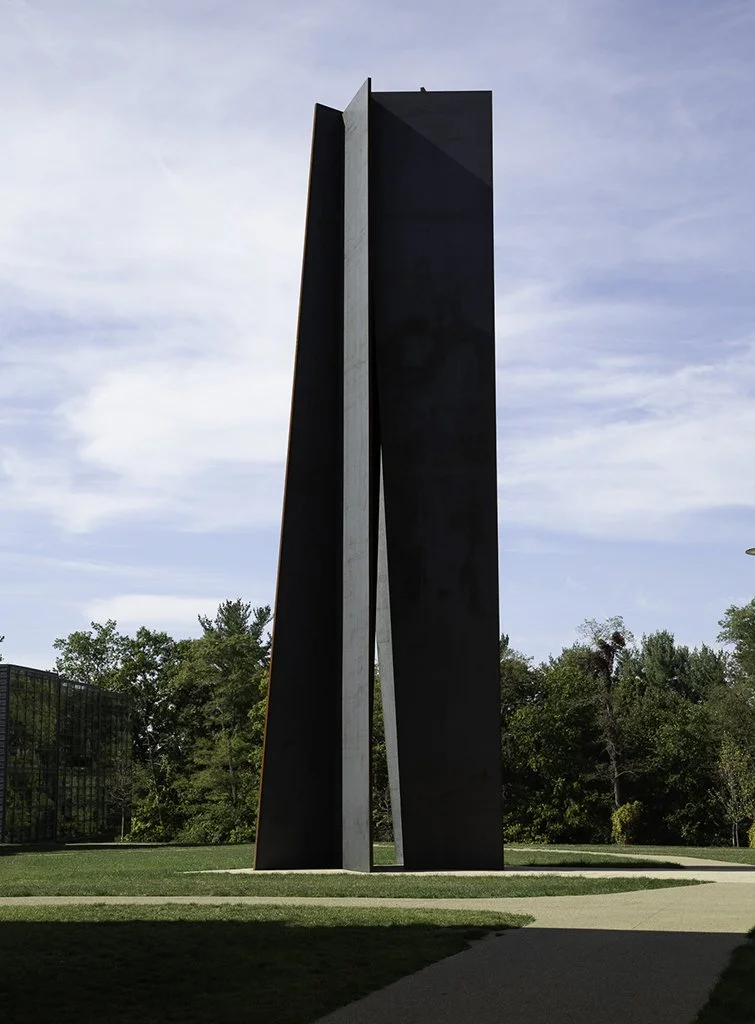
Richard Serra, Pivot, 2021, weatherproof steel, five plates: each approximately 60 feet x 10 feet x 3 inches. Collection of The Gund at Kenyon College; Gift of Mr. and Mrs. Graham Gund '63. Photo by Calista Lyon.
JC: Are there specific areas of focus or gaps in the collection that you are trying to fill at The Gund?
DD: While specific collecting priorities or gaps are not formally published, they have been acknowledged by our board and are areas we keep a close eye on. Recent major gifts—most notably the 2025 gift from David Horvitz '74 H'98 and Francie Bishop Good—have significantly strengthened representation by women artists in our collection. With this transformative gift of 72 works, 46% of The Gund’s collection will now comprise works of great relevance by women artists. This is an extraordinary milestone for any institution, but especially meaningful for a young teaching museum at a liberal arts college. Afterall, we are only 15 years old.
For Kenyon, this shift is not simply numerical. It reflects a broader institutional commitment to expanding the narratives, perspectives, and artistic lineages our students encounter. Increasing representation allows us to present the complexity of modern and contemporary art with greater integrity and depth. It ensures that the works that students study—and the histories they learn—more accurately reflect the richness of global artistic production.
This achievement also strengthens our ability to serve as a resource for faculty across disciplines, from art history and studio art to gender studies, anthropology, creative writing, and beyond. It reinforces Kenyon’s dedication to inclusive teaching practices and demonstrates how collection development can actively support curricular innovation.
Most importantly, it positions The Gund as a leader among academic museums in addressing long-standing inequities in the art world. By choosing to foreground voices that have historically been marginalized, The Gund is not only building a more substantial, more nuanced, more dynamic collection—it is modeling the values of curiosity, equity, and critical thinking that define a Kenyon education. This is a point of genuine pride for the College and a powerful foundation for future collecting.
JC: What percentage of the collection has been acquired through donation and other philanthropic vehicles?
DD: A large portion of the collection has grown through gifts from major donors like the Gund family and longtime supporters like David Horvitz and Francie Bishop Good. Given that we are a very young institution, philanthropy is clearly the principal vehicle for acquisition. Securing meaningful gifts through Museum Exchange has also been transformative. I think about the incredible painting by Ulala Imai, for example, which we recently received. Imai was part of the most recent 15th Shanghai Biennale and her work is in numerous private and public collections such as the San Francisco Museum of Modern Art, Dallas Museum of Art, and High Museum, among others. It is amazing to be able to reach the same level of quality and commitment to emerging and promising artists.
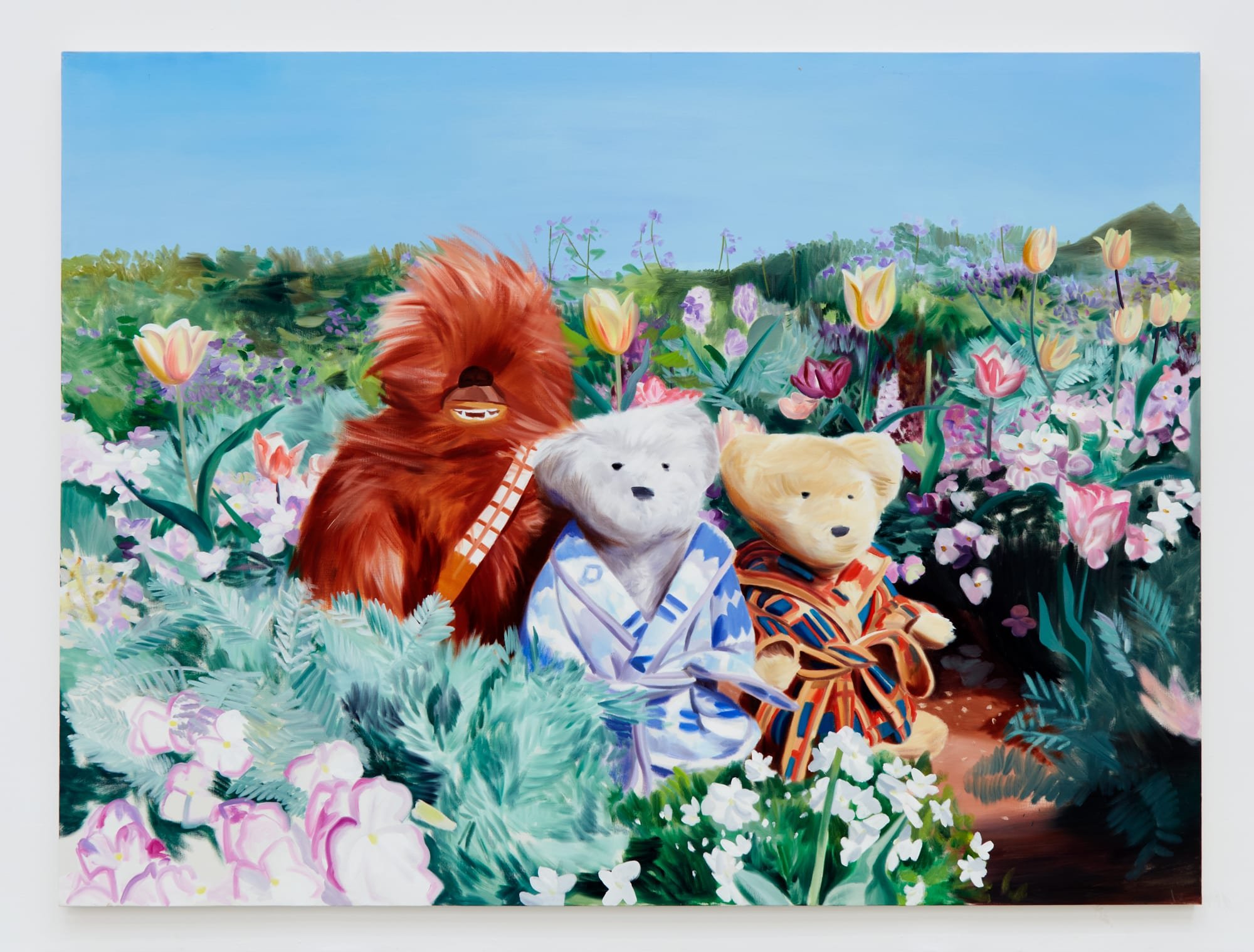
Ulala Imai, Care, 2022, oil on canvas, 76 ⅜ x 102 ⅛ inches. Collection of The Gund at Kenyon College; Gift of Laura and Stafford Broumand.
JC: How has work been selected and acquired over the years? Is the process different for works entering The Gund versus campus art?
DD: The Gund’s acquisitions are guided by curatorial priorities tied to teaching, research, and exhibition programming. Our approach to selection is grounded in museum-level rigor, but it is also shaped by how works resonate within the constellations of meaning that emerge across the collection. We do not collect according to chronology or completeness; instead, we ask how a work can expand what we do, deepen inquiry, and enter into meaningful dialogue with other works already in our care.
A defining element of our collecting practice is collaboration. The very first artwork to enter the collection, The Visitors (2012) by Ragnar Kjartansson, is co-owned with the ICA Boston and the Guggenheim Museum in New York. This foundational partnership established a model for how we aspire to build the collection: through shared stewardship, shared expertise, and shared access.
Public art across campus is managed collaboratively through a committee structure and thoughtfully integrated into campus planning, ensuring that works contribute to Kenyon’s identity as a living artistic and educational environment.
JC: Do the students have a favorite work?
DD: Oh that is difficult. It’s like asking who is my favorite student! ;) If I had to choose one piece that regularly captures students’ imaginations, it might be The Visitors (2012) by Ragnar Kjartansson. The work is both transporting and transformative. We often receive emails from alumni hoping to return to campus when it is next on view, which I think speaks to its lasting impact and makes it a clear favorite. One artwork that faculty members consistently request for their classes is Dancing at the Louvre (1991) by Faith Ringgold. Yes—both these masterpiece are part of our collection! For students, favorites tend to evolve as familiarity with the collection increases. It’s important to remember that we work with 50–60 faculty members and host approximately 100 class sessions each semester, giving students meaningful opportunities to engage with a wide range of works and through the lenses of different areas of study.
JC: How does your role on a college campus differ from that of a typical museum director?
DD: As director of a museum within a college context, responsibilities include not only exhibition planning and collection stewardship but also integrating art into curriculum and student learning, collaborating with faculty across disciplines, and supporting teaching and academic inquiry—an expanded role compared to many independent museum directors. That said, The Gund is a separate 501(c)(3) and as such, I do oversee a board of directors and we do take very seriously our responsibility to be a museum for our community beyond the campus purview.
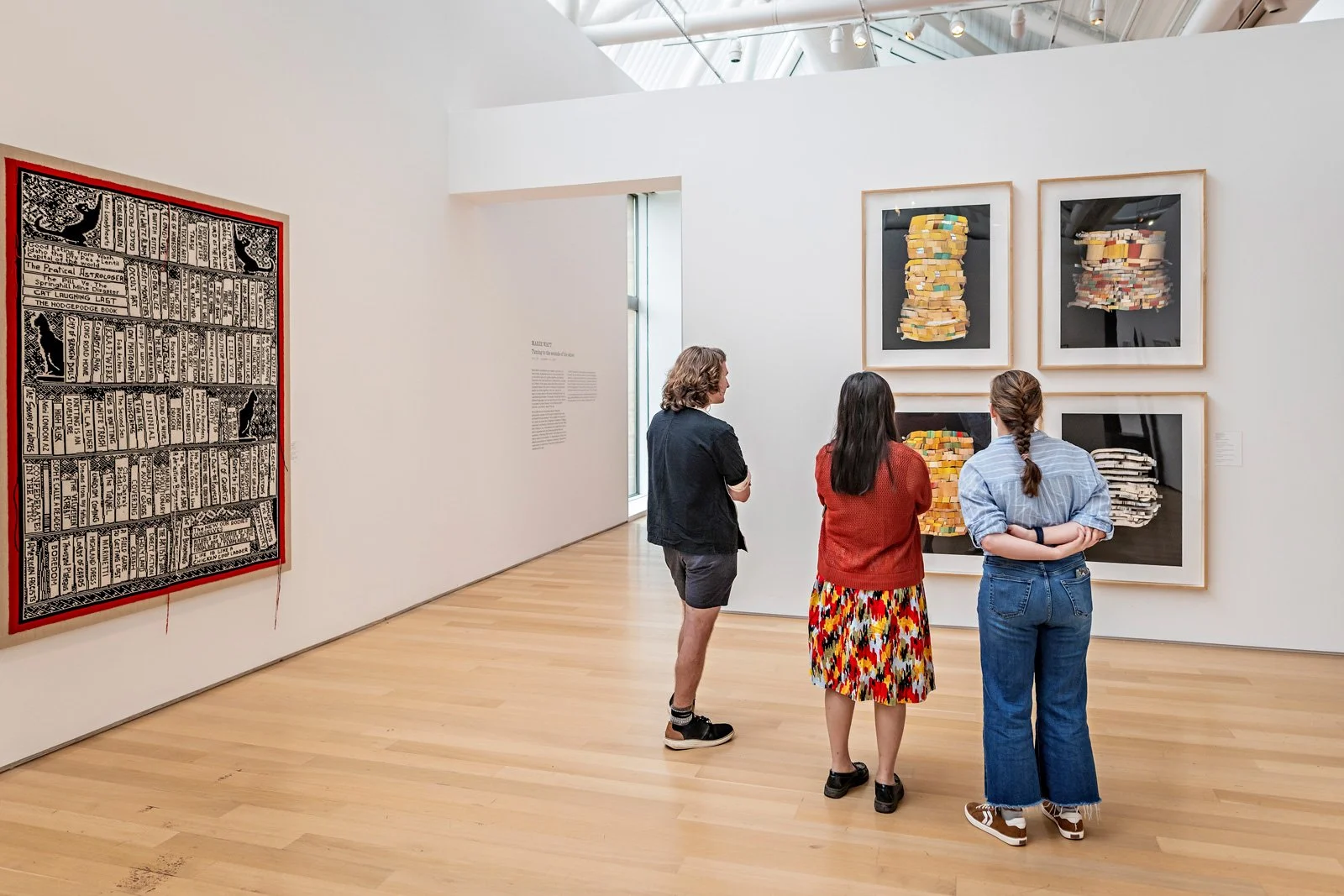
Left to right, top to bottom: Ann Hamilton, book weight uu, book weight pp, book weight tt, book weight qq (human carriage), 2009/2010, archival inkjet prints, AP 1 of 2, 46 ¼ x 36 inches (framed) each. Collection of The Gund at Kenyon College; Gift of Gift of Solway Gallery. Photo by James DeCamp Photography.
JC: How do faculty utilize the collection and The Gund? Do you collaborate with faculty or students when considering exhibitions?
DD: The Gund works closely with faculty to support interdisciplinary teaching with art and campus partners can propose events or exhibitions. Faculty integrate collection works into courses, and student interns support interpretive materials and programming. We have an amazing leader in that capacity, Dr. Jodi Kovach, our Pamela and Christopher Hoehn-Saric Deputy Director of Curatorial Affairs and Education.
JC: Could you share examples of interdisciplinary ways faculty have utilized the collection?
DD: The Gund’s commitment to serving learners across its 28 academic departments demonstrates broad interdisciplinary engagement—from humanities and sciences to social sciences and creative arts. I like the example of the Introduction to Biology course, which hosts its first class every fall at The Gund. The session entails the sustained observation of Cy Twombly’s Natural History, Part I, Mushrooms (1974) lithograph series. By working in small groups to unpack the form and content of these artworks, students engage in a collaborative activity that sharpens their observation skills for laboratory work, and helps them to appreciate that time devoted to careful looking is an important mechanism of learning in STEM fields. Furthermore, the exercise allows students to dwell in productive ambiguity, motivating them to raise questions as opposed to just seeking answers.
JC: You mentioned student interns. How do they interact with the collection?
DD: What distinguishes the Gund Associates Program is its deep integration into the life of the museum. Students do not simply shadow professionals—they work alongside them. Each academic year, 40 Associates contribute research that informs exhibitions, draft interpretive materials for public audiences, assist in the care and contextualization of the collection, and support programs that foster dialogue across campus and beyond.
This model reflects a broader philosophy: within a liberal arts college, the museum can function as both classroom and catalyst. The program develops research, writing, and collaborative skills while preparing students to translate complex ideas for diverse audiences. For those pursuing careers in the arts—and far beyond—the experience cultivates analytical rigor, ethical reasoning, and leadership.
At Kenyon, the Gund Associates Program is not an auxiliary internship—it is a defining institutional commitment.
JC: Daisy, We greatly appreciate you sharing this wonderful perspective into the significance of art at Kenyon. The students and the broader community are truly fortunate. We are eager to continue contributing to the art offerings at Kenyon and the meaningful impact of your efforts.
