Over the past year, we have observed a growing interest in university art museums and their potential to engage audiences on campus and within the broader community. In particular, we have seen—both firsthand and through ongoing press coverage—increased attention to gifts of art to these institutions, indicative of their unique position within the museum landscape.
We are seeing this trend reflected in our own work, with more and more donors selecting academic art museums from among a competitive field of prospective institutions. These donors recognize the many advantages university museums offer for the long-term stewardship of their works, from free public access and extended exhibition opportunities to deeper scholarly engagement, often in direct contact with rising generations of art historians, curators, and practitioners.
As noted in a recent Observer article, among its many distinguishing qualities, the university art museum stands out for its steadfast commitment to an academic tradition of fostering critical thought, even as broader cultural and political tides waver and oppose. Author Dani Lamorte reflects on the exceptional exhibition programming at the Weisman Art Museum at the University of Minnesota, writing: “Against a backdrop of bland semiquincentennial celebrations, and the NEA’s Freedom 250 push, projects like “Merciless” show that university art museums continue to pursue the ideals of intellectual progress and creative freedom which initially inspired them.”
The excellence of the academic art museum is very much on view within the Museum Exchange community. Our university museum members touch all corners of the country, many located in cities and towns outside of the nation’s major metropolitan hubs, deepening both the impact of their work and the significance of gifts made to them.
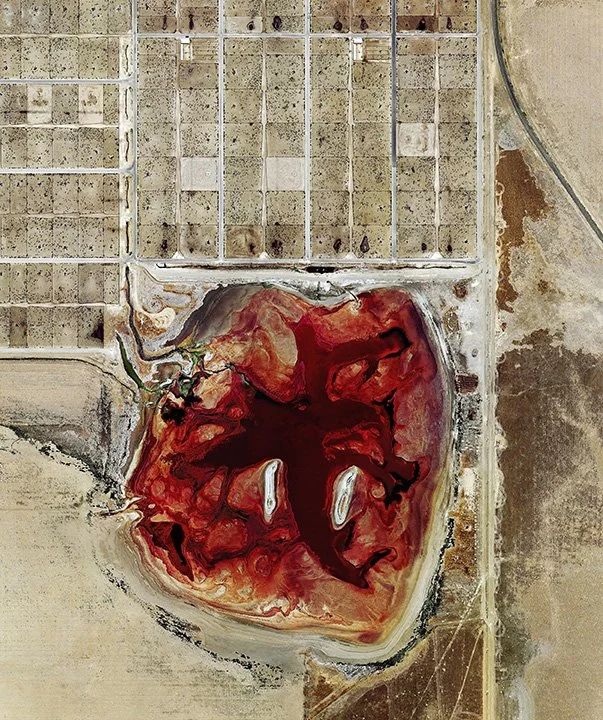
Mishka Henner, Coronado Feeders, Dalhart, Texas, 2013, archival pigment print, edition of 3 + 2 AP, 71 1/2 x 60 1/4 inches. Collection of Richard M Ross Art Museum, Delaware, OH; Gift from Collection of Marguerite Steed Hoffman.
The Richard M. Ross Art Museum at Ohio Wesleyan University is one such example. Located in Delaware, Ohio, the Ross serves its university and central Ohio communities through exhibitions, programs, and a growing collection of more than 3,000 works “as a resource for creative discovery, dialogue, and interdisciplinary learning” (Christopher Yates, 2025-26 Yearly Impact Report). In just over one year of working with Museum Exchange, the Ross has acquired more than a dozen works (with more acquisitions in progress), centering their commitment to representing contemporary issues and diverse perspectives. One of their early acquisitions, Mishka Henner’s (British, b. Belgium 1976) Coronado Feeders, Dalhart, Texas (2013), captures an unsettling view of an American feedlot’s waste lagoon as seen through Google Earth imagery. This depiction of “the heart of a very aggressive, ruthless economic system of meat farming” (Artist, British Journal of Photography) reflects the museum’s critical engagement with questions surrounding our relationship to the environment, its programming theme for 2025-26.
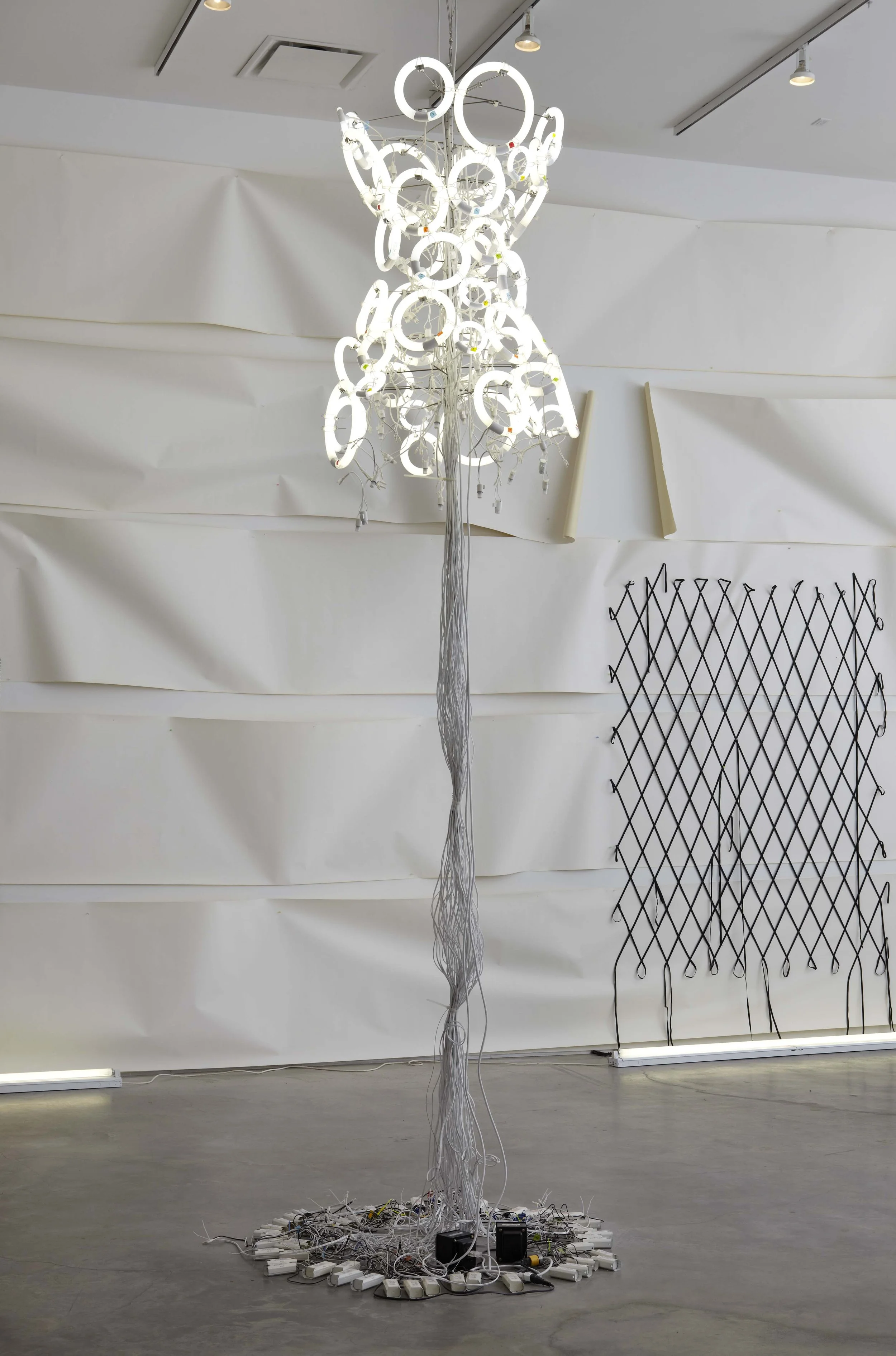
Yuichi Higashionna, Untitled (Chandelier 14), 2010, fluorescent light, electric wires, aluminum and ballast, edition 1 of 3 + 1AP, 51 1/4 x 31 1/2 x 21 1/2 inches. Collection of the Crow Museum of Asian Art, Richardson, TX; Gift of the Martin Z. Margulies Foundation.
We are also privileged to work with university museums that advance the field through very focused collecting missions, like the Crow Museum of Asian Art at The University of Texas at Dallas. The Crow celebrates Asian cultures and art through a collection ranging from the historical to the contemporary, seeking to “define Asia as endlessly diverse, and not of one place, time, or idea” (Mission Statement). Through their budding collaboration with us, they have welcomed important works that do just this, from artistic perspectives including Hadi Falapishi (Iranian, b. 1987), Yuichi Higashionna (Japanese, b. 1951), and more. For donors, placing a work at an institution like the Crow means ensuring a lasting dedication to understanding and elevating its very specific origin, maker, and cultural significance.
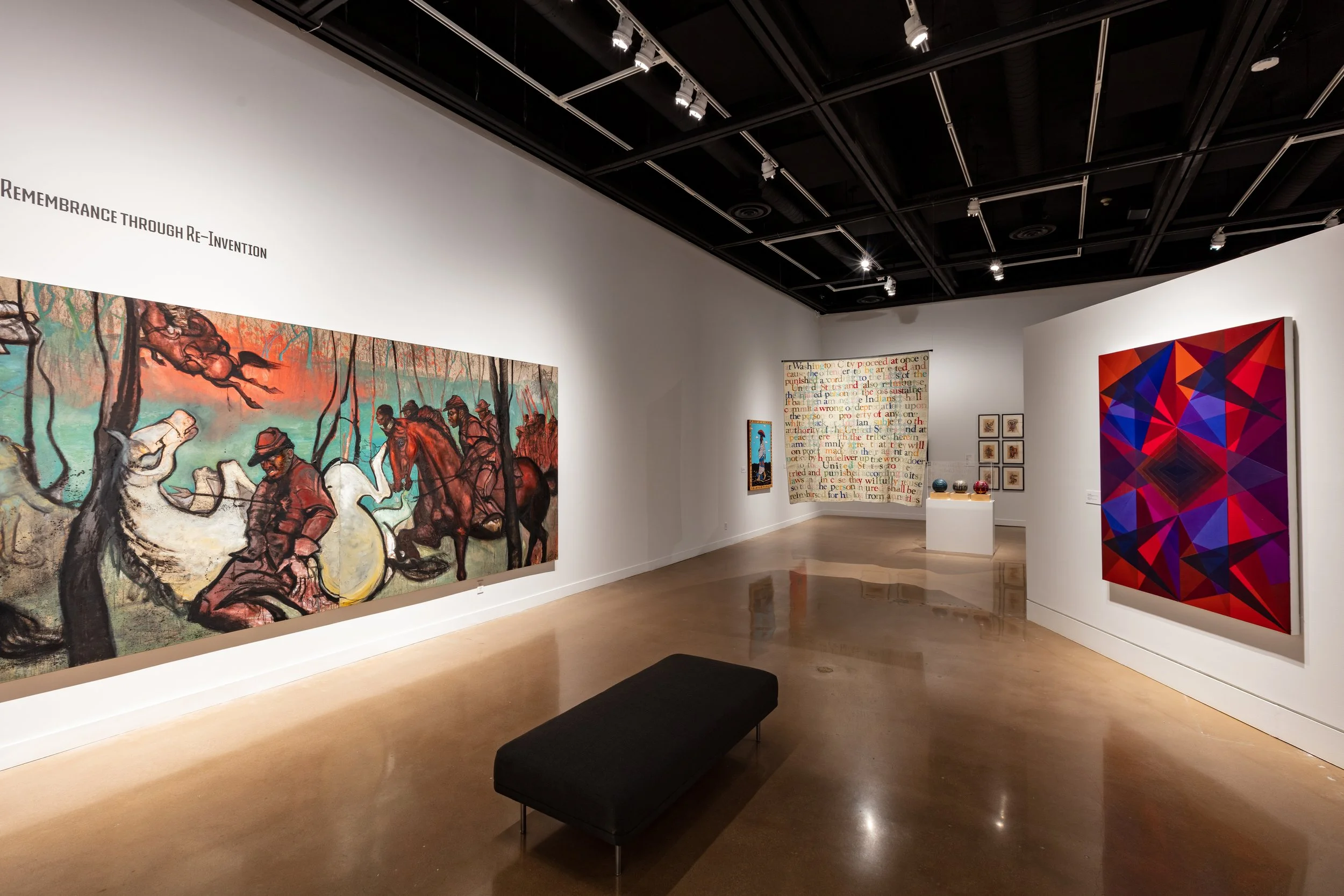
Left: Chaz Guest, The Tenth, 2019. Oil paint and ink on linen, 84 x 192 in. Ulrich Museum of Art, Wichita State University, Wichita, KS; Gift of Ms. Feng Jianhua. Installation view: Myths of the West: Narrating Stories of the Land and People through Wichita Art Collections, Ulrich Museum of Art, Wichita State University, Wichita, KS, August 25 – December 3, 2022. Photo: Dimitris Skliris.
It has equally been an honor to support the important representation-expanding work of longer-standing Museum Exchange members like the Ulrich Museum of Art at Wichita State University. Over more than five years working together, we have directly witnessed their imperative to “expand human experience through encounters with the art of our time” (Mission Statement). In that period, they have acquired over 40 donations through Museum Exchange alone, touching on themes from gender roles and domesticity to cultural representation, hybridity, and displacement. Many of these works have gone on view, in exhibitions such as Myths of the West: Narrating Stories of the Land and People through Wichita Art Collections (2022) and Dream Machine: Fantasy, Surreality, and Play (2024).
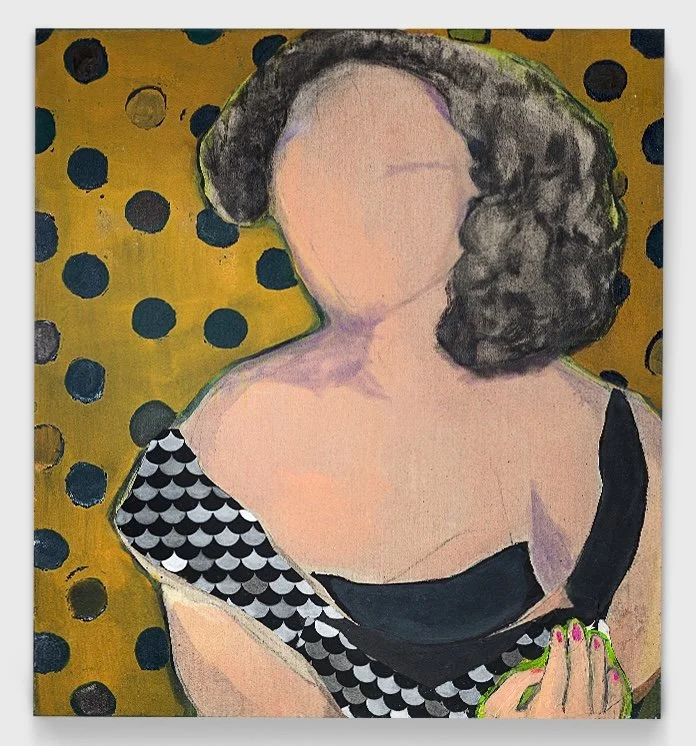
Cristina Canale, Petit Pois, 2020, acrylic, oil, graphite, charcoal and collage of cotton fabric on linen, 43 1/4 x 39 3/8 inches. Collection of Ulrich Art Museum, Wichita, KS; Gift in honor of Abraham Palatnik.
Embedded within a recognized Emerging Hispanic-Serving Institution, the Ulrich has also sought to represent its evolving communities through intentional acquisitions of works by Latine practitioners such as Rodrigo Valenzuela (Chilean, b. 1982), Lila de Magalhaes (Brazilian-Swiss, b. 1986), and Cristina Canale (Brazilian, b. 1961). These works have gone on to be featured in the type of innovative curatorial projects that emerge from the particularly fertile ground of the university art museum context, like Bare It All (2026-27), in which the museum “[endeavors] to display most of [its] collection of approximately 7,300 works, in all [their] galleries, at one time.” This exhibition stands as a powerful response to the miniscule fraction (3-5%, per AAM and other estimates) of the average museum’s collection that is typically on view and illustrates the special capacity of the academic art museum to increase visibility for works that might otherwise sit in storage.
With so many great examples of the central role that university art museums have in advancing the field at large, it’s really no wonder that they are getting so much (well-deserved) attention lately, from media outlets and donors alike. We hope to see this continue, beyond a trend to a greater awareness and appreciation of the importance of these institutions!